
Carnivore Country?
Slovenia now boasts some of the highest densities of brown bears in the world, while wolf numbers are recovering and lynx have been successfully reintroduced. But this success has been hard won, reflecting a deliberate and sustained focus on maintaining a healthy balance between nature conservation and the needs of human communities.
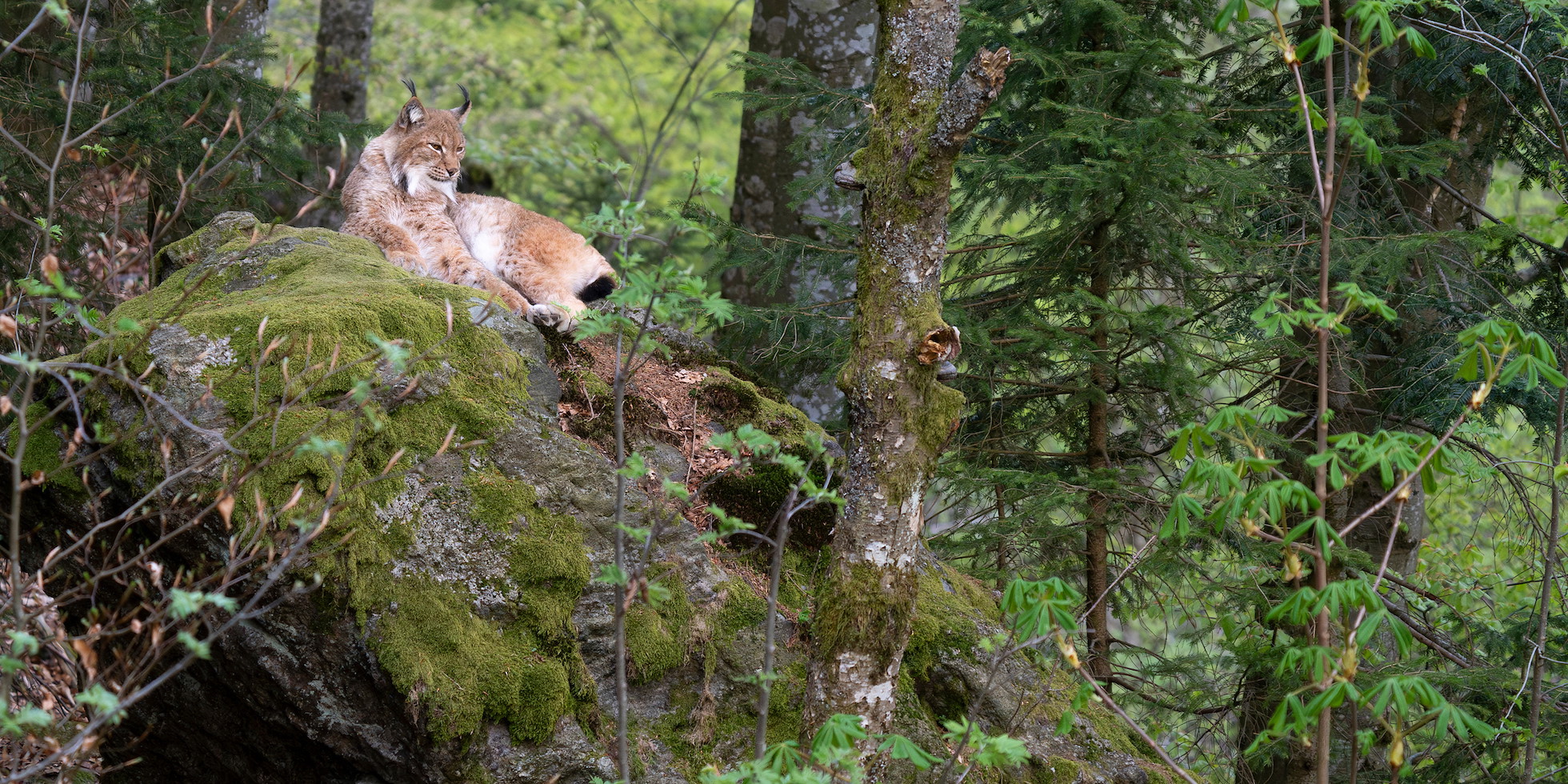
Slovenia is smaller and more densely populated than Scotland. In fact, it’s smaller than Wales. But despite its small size and relatively populous countryside, Slovenia is home to nearly 1,000 brown bears, over 120 wolves and a growing population of around 50 reintroduced lynx. Scotland, by contrast, is no longer home to any of these species, but could that change?
Despite its small size and relatively populous countryside, Slovenia is home to nearly 1,000 brown bears, over 120 wolves and more than 50 reintroduced lynx
In Scotland, we’re used to the cost of living with some wild animals like deer, badgers or even woodpigeons – from collisions with vehicles to impacts on agriculture and forestry. But we're not used to large carnivores. This lack of familiarity can make living with them seem daunting. And yet, most other countries manage.
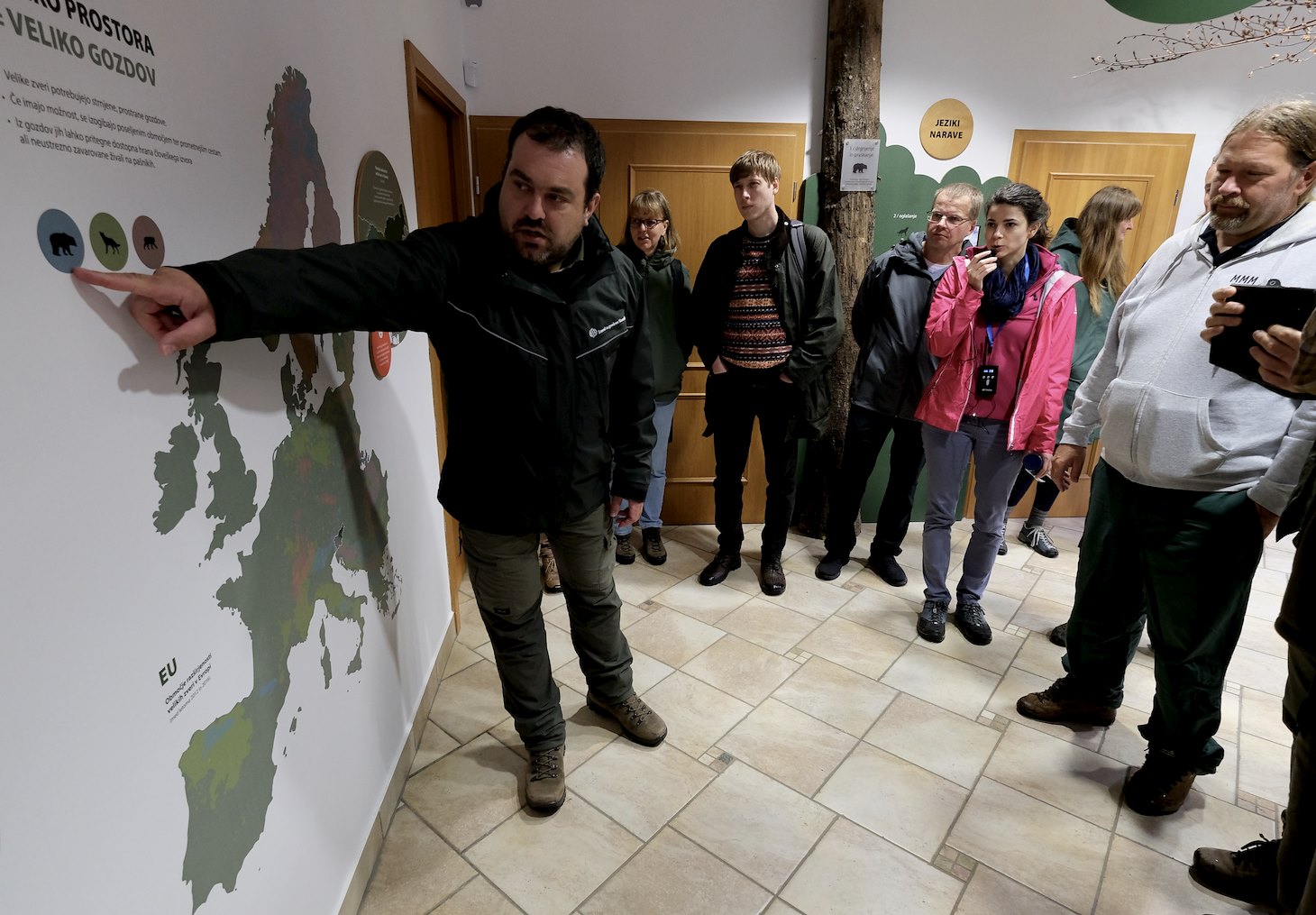
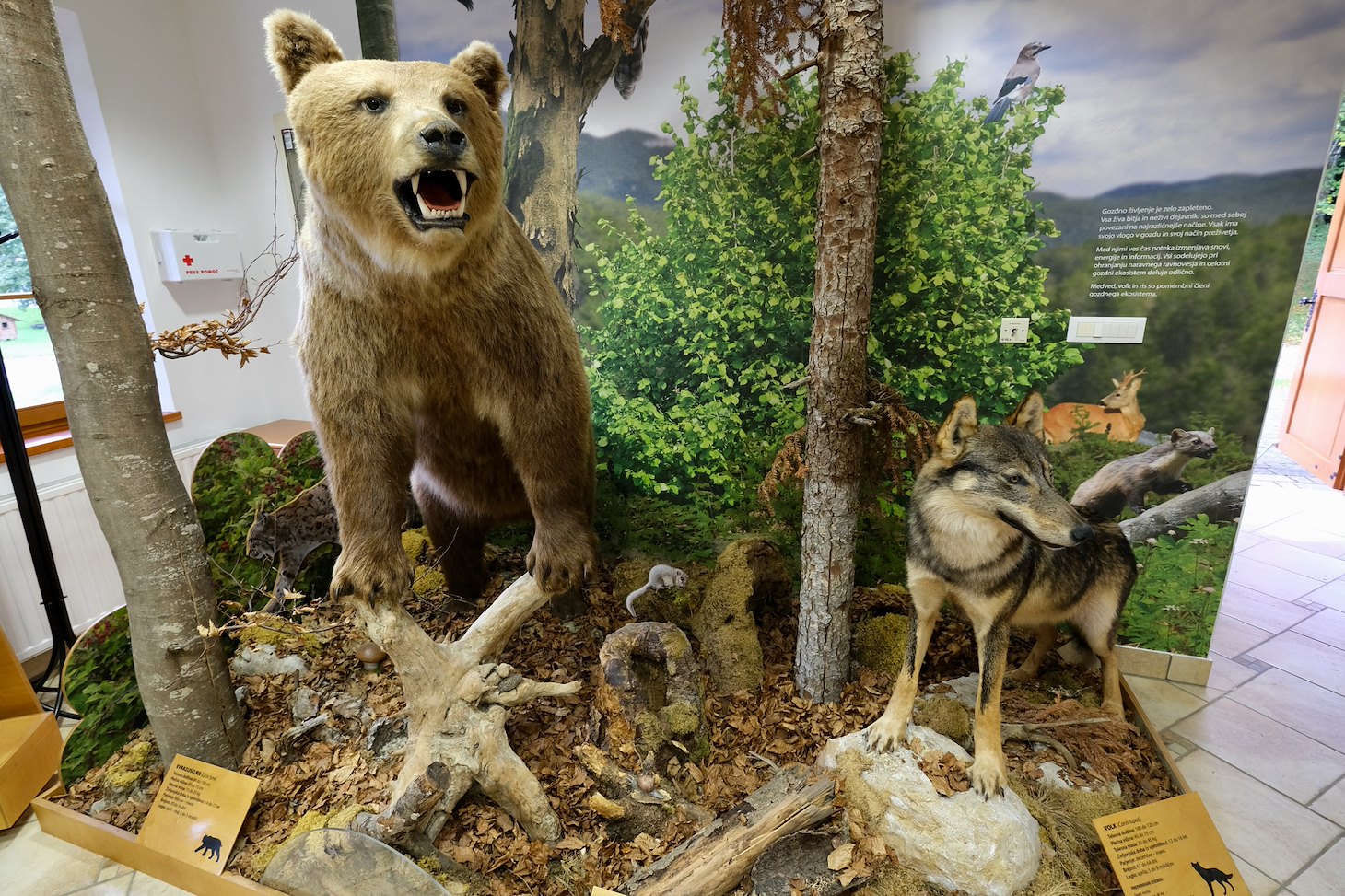
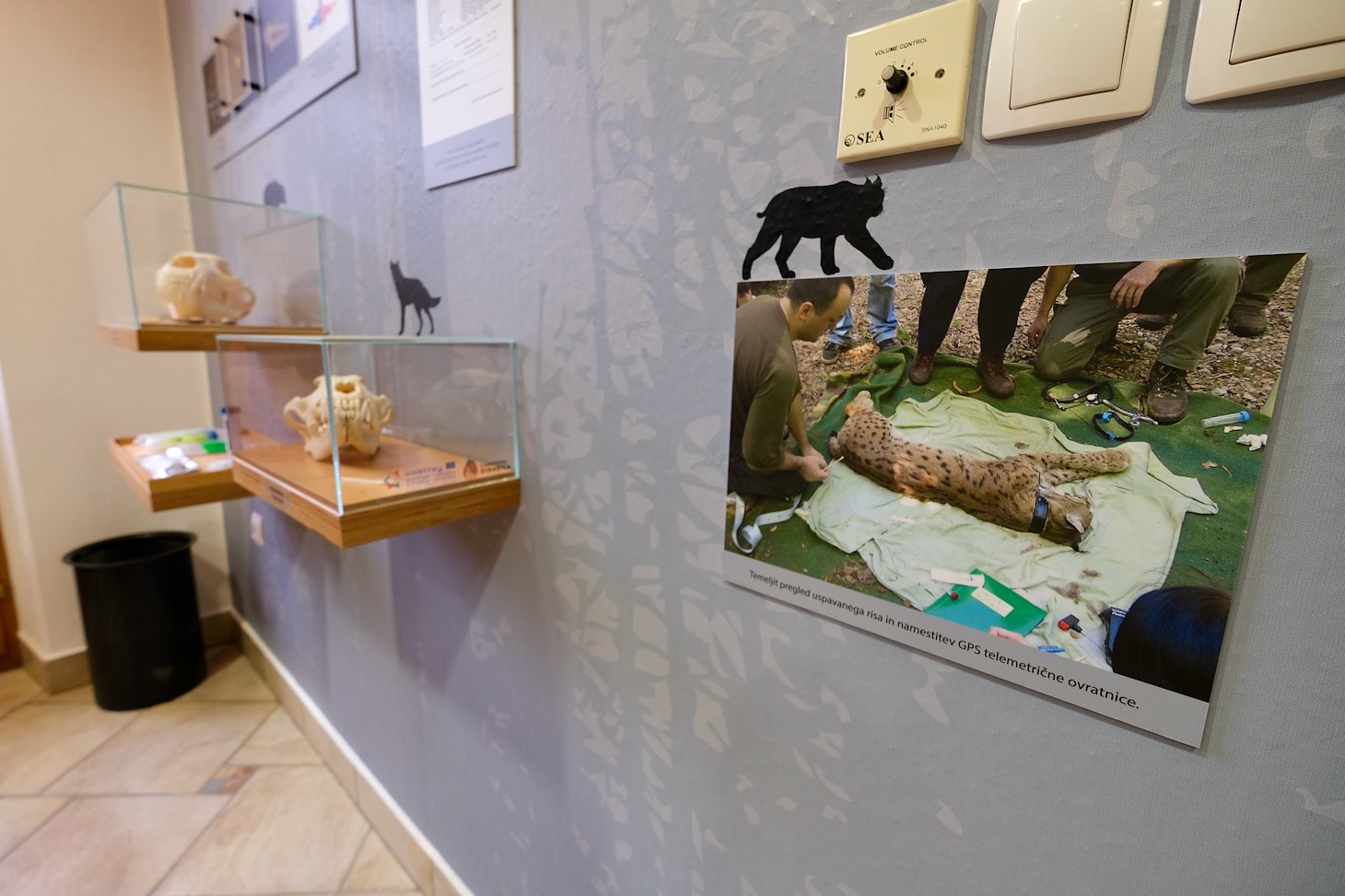
Mašun Forest House, in the south of Slovenia, features a small museum in the heart of carnivore country. Here, Sergej Trebec, a local forester, told us he ‘sees bears every day in the forest.’
Habitat matters of course. Slovenia is now 60% forested, making it the third most forested country in Europe. But other European countries with similar amounts of woodland to Scotland have successfully reintroduced lynx. Indeed, parts of the Swiss Alps which now support lynx have no more forest cover than the most forested parts of Scotland, and Switzerland has around 2,000 km2 less woodland than Scotland overall.
Furthermore, while Scottish forests may be largely made up of non-native plantations, any forest with deer in it makes for suitable lynx habitat. A lack of habitat certainly isn’t the reason Scotland lacks lynx today.
During the 19th century, Slovenia’s approach to carnivores was similar to Scotland’s. Wolves and bears were nearly wiped out. Early in the 20th century, lynx were completely eradicated. But then attitudes changed. Bears began to be protected in Slovenia in 1935 and the wolf gained full protection in 1993. Slovenians had taken a momentous decision: they wanted to live with large carnivores.
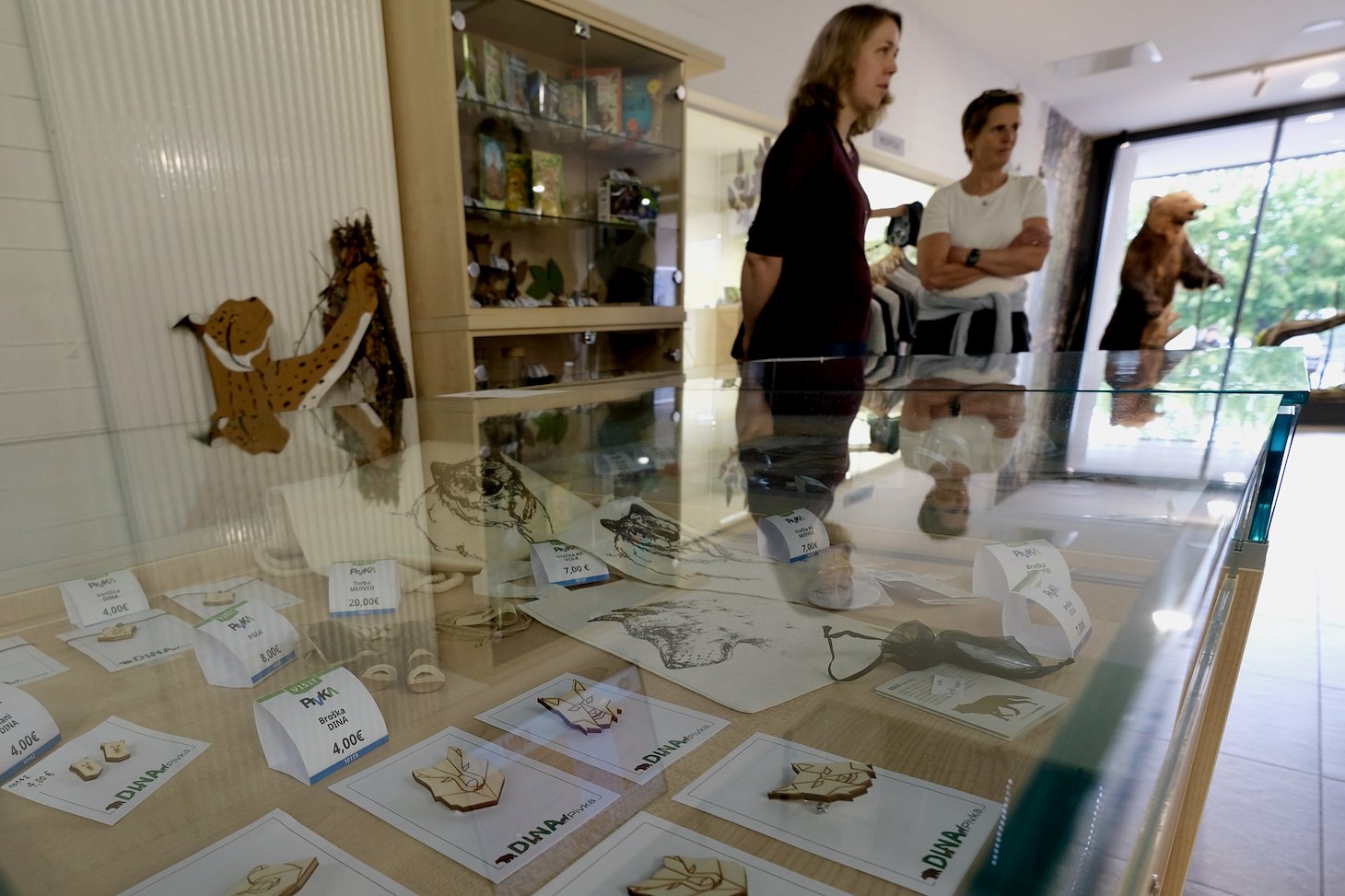
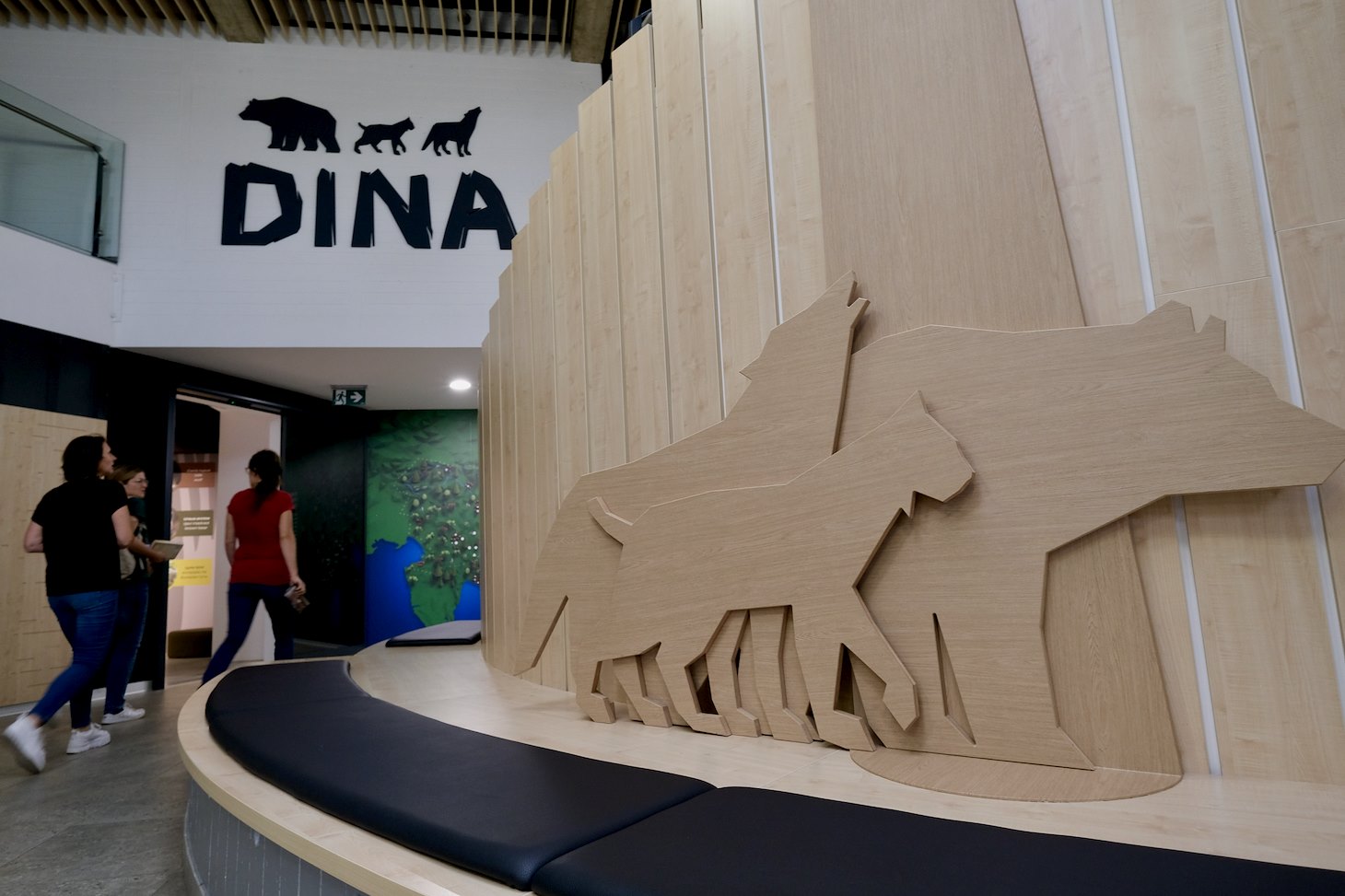

The DINA Large Carnivore Centre at Pivka immerses visitors in the world of large carnivores and showcases the local municipality’s pioneering work to coexist sustainably with lynx, wolves and bears.
This shift in attitudes came too late for Slovenia’s lynx. But in the 1970s, six cats were reintroduced from Slovakia (then Czechoslovakia). The release was initiated by hunters, who felt Slovenia’s forests were missing something vital. Twelve more lynx have been added in recent years, diversifying a limited gene pool, and hunters were asked to help build the release enclosures and advise on the choice of release sites. They even took charge of caring for the lynx while they were confined and have helped to monitor them after their release.

Local hunter, Peter Benedik (second from left), describes looking after the lynx in these enclosures. He says that most hunters in this part of Slovenia were originally opposed to lynx, but that they are now evenly divided – a significant shift.
Now, hunters in areas with lynx are given more flexibility in meeting deer management targets, while those in regions without lynx face heavy fines if they fail to meet targets. It might sound like Slovenia has carnivore conservation all figured out, but even here, coexistence remains a challenge. Although many Slovenian hunters now value wolves, others retain a zealous focus on favoured quarry species, and still resent any reduction in the number of deer or chamois available to hunt.
Adjusting to the return of large carnivores has also been difficult for farmers in places like the Julian Alps, in Western Slovenia, where all three large carnivore species were hunted out more than a hundred years ago. The Slovenia Forest Service works with farmers to develop practical measures that reduce conflicts, but some have still given up farming, while others have switched their focus to tourism.
It might sound like Slovenia has carnivore conservation all figured out, but even here, coexistence is a challenge
Some farmers would probably prefer it if large carnivores had never returned, but when it comes to lynx, they’re a minority. A survey by Slovenia’s Forest Service revealed that 66% of Slovenian livestock breeders agreed: ‘It is important to maintain lynx for future generations.’ Across the wider public, support for lynx was registered at 88%, including 81% support from hunters.

After wolves returned to his area, Jože Mohoric’s farm suffered two attacks in two years. He then erected chest-high electric netting around his pastures and has suffered no further losses. But these mobile enclosures take a whole day to set up in difficult terrain.
It helps that farmers are offered support to protect their livestock. The Slovenian Government will fund 80% of the costs of installing predator-proof fencing after a confirmed predator attack, and offers compensation for livestock proven to have been killed by wolves, bears or lynx. There is also a ‘Help a Farmer’ scheme, which sends volunteers to work on farms that coexist with predators, increasing public understanding of the practical challenges faced by farmers.
Aleš Sedmak knows all about these challenges. He breeds livestock guardian dogs on his farm near Juršce, in southern Slovenia, in a region that’s home not only to lynx, bears and wolves, but also to a growing number of golden jackals. He says wolves will kill lone dogs and a pair of dogs are not enough to protect a flock – ‘but if you have three well trained dogs, you can sleep well at night.’
‘When you know the mentality of the carnivores, you can protect yourself’
Aleš relies on electric fencing to keep bears out of his pastures and on dogs to defend his livestock against wolves, which can jump over low fences or sometimes crawl under them. Lynx apparently aren’t a problem here since they keep to the forest. Golden jackals are his biggest issue, being as fierce as wolves and as clever as a fox, ‘but when you know the mentality of the carnivores, you can protect yourself’ says Aleš.

Three of Aleš Sedmak’s Bosnian Tornjak livestock guardian dogs mingle with sheep and goats in a fenced pasture on his farm.
Livestock guardian dogs can certainly help, but many farmers are unfamiliar with their use. Aleš also admits that some of his Central Asian Shepherd dogs, a larger and more aggressive breed than his Bosnian Tornjaks, could be dangerous. The state provides insurance, covering farmers against the risk of dog attacks on people, but it’s a clear reminder there’s no single solution to living with large carnivores.
Rok Cerne’s department at the Slovenia Forest Service specialises in promoting human-wildlife coexistence. He highlights the importance of education and community relations. ‘Dealing with the attitudes of people is the most important action we take,’ he says. While he stresses the need to invest in protection measures in the worst conflict hotspots, Rok sees culling individual problem animals as an equally critical way to maintain a healthy balance between conservation goals and the needs of human communities.

Living with large carnivores demands adaptations – all the way down to the design of rubbish bins.
Coming from a nature-depleted country like Scotland, it would be easy to portray Slovenia as some sort of wildlife utopia, where people and large carnivores coexist in perfect harmony. But the truth is much more complicated. ‘We are all in favour of nature conservation in principle,’ points out Andrej Arih, Head of Nature Conservation at Slovenia’s Triglav National Park. ‘But when it threatens our personal interests, we tend to change our minds.’
Some believe that Scotland is unsuitable for lynx, citing the potential for negative impacts on agricultural communities. But this perspective overlooks the growing public appetite for nature restoration, dismisses the many benefits that lynx could offer and ignores the fact that sustaining a healthy natural environment nearly always involves some trade-offs. Coexistence with predators presents challenges around the world – challenges most countries are willing to meet. The question is not whether negative impacts could occur in Scotland, but whether we are willing to manage them, to enjoy the benefits that a rich natural environment promises. In the end, much depends on our mindset, as well as developing a robust and practical framework to support coexistence.
As we consider the possibility of welcoming back Scotland’s missing lynx, Slovenia reminds us: where there’s a will, there’s a way.